

CEFA staff
Jag DeSaint
Executive Director, The Cefa Brief, CEFA, CEFA
Executive Director of The Cefa Brief.
Photo: The Cefa Brief
Biography
Jag DeSaint is the Executive Director of The Cefa Brief, the Center for Economics & Foreign Affairs' publication of signed commentary and analysis. He writes on industrial capacity, development finance and the economics of foreign policy.
Languages: English
Books by Jag DeSaint
The PrincipleThe Silent Architecture of Authority
&Think Publishing · 2026
A ruthless examination of how power operates beneath the visible language of politics, institutions, loyalty, fear, legitimacy, succession, and control. This is not power as advertised. This is power as practiced. Across history, authority has rarely belonged to the loudest figure, the most virtuous figure, or even the figure whose title appears most prominently on the door.
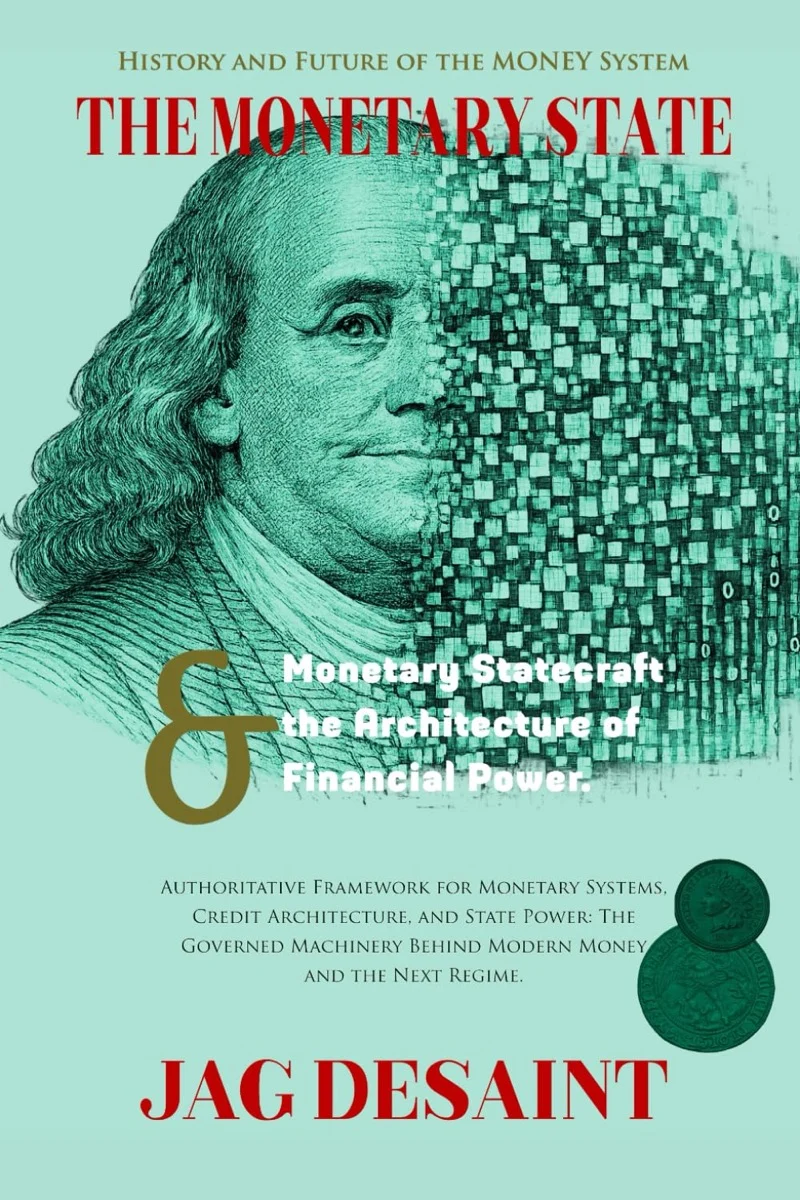
The Monetary StateMonetary Statecraft & the Architecture of Financial Power
&Think Publishing · 2026
Money fails first as a delay. A payment marked complete stays reversible. A clearing window extends. A margin call arrives early. A corridor tightens documentation and turns routine into exception. In that moment, the argument returns, and the hierarchy hidden in calm becomes visible as behavior. The Monetary State begins there. It treats money not as a symbol or a policy dial, but as a governed architecture of claims, ledgers, collateral, and finality that decides what counts as real when time becomes scarce.
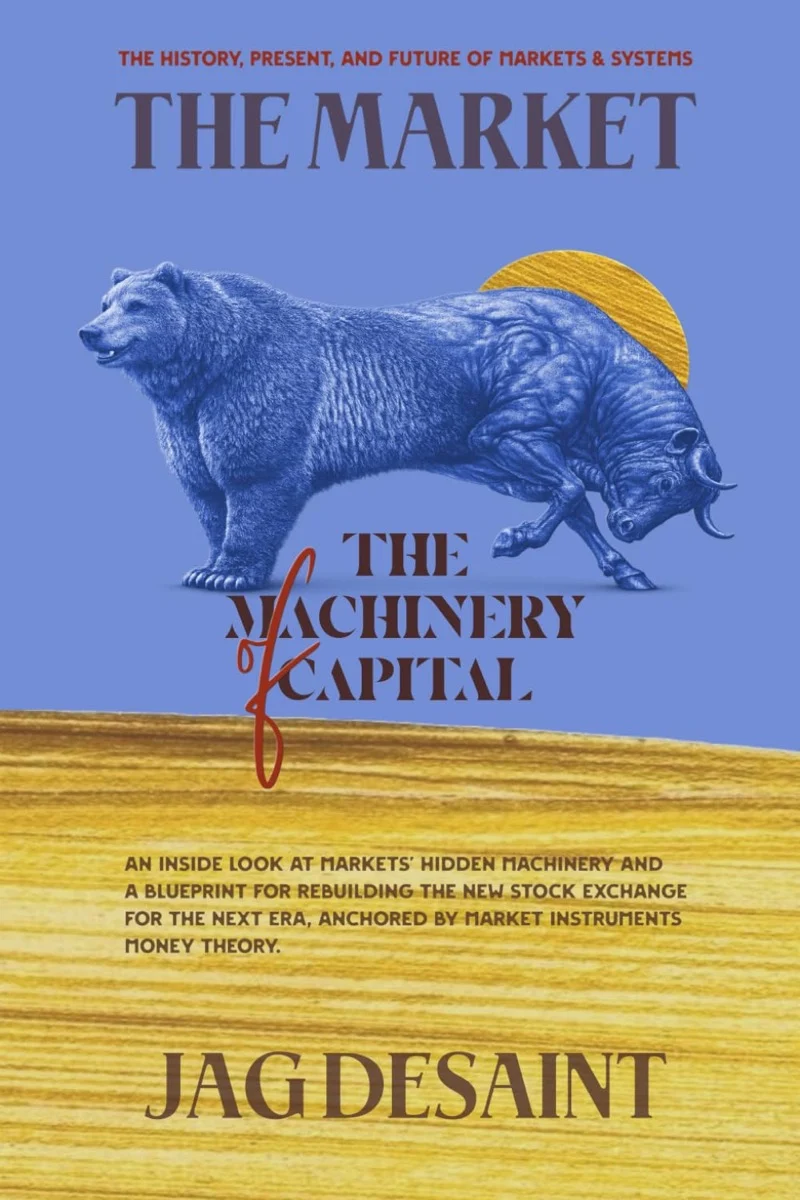
The MarketThe Machinery of Capital
&Think Publishing · 2026
Markets are usually explained with stories about fear and greed, innovation and disruption, boom and bust. Those stories are not false, but they are not the machine. The machine is rule, record, proof, and timing: who is allowed to see first, who is allowed to settle first, whose mark becomes official, whose correction becomes law, whose dispute is resolved quickly, and whose uncertainty is priced as a permanent penalty. The market does not only price assets. It prices time, and in stress, time becomes the most valuable product of all.
Empire BornMother of God
&Think Publishing · 2026
In September 1592, the river looks harmless. Gray water, low sky, the kind of day that makes men believe the world is small. Then a battered Portuguese carrack drifts in, forced by weather and pursuit, her hull scarred, her rigging sagging, her decks crowded with exhausted hands who know they are outnumbered. Her name is Madre de Deus. The name hits the tongue like a prayer. The ship answers like a confession.
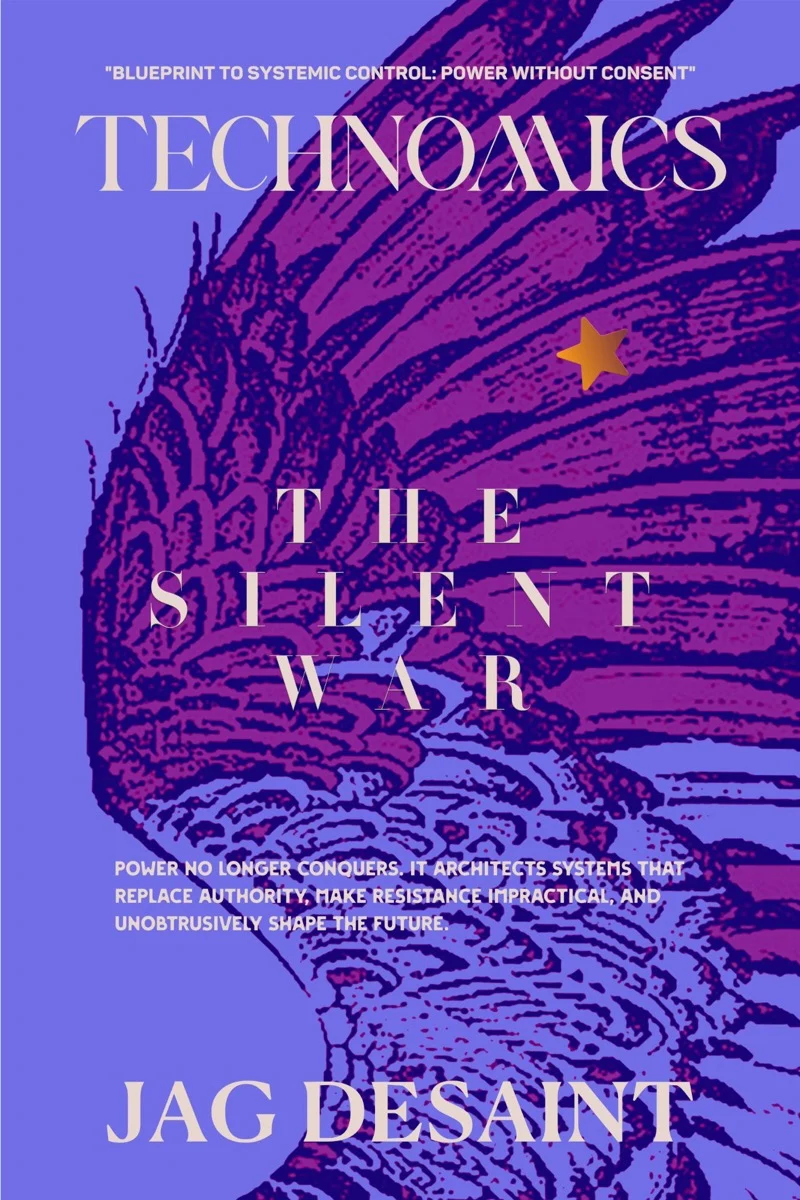
TechnomicsThe Silent War
&Think Publishing · 2026
Power no longer operates mainly through force, ideology, or visible authority. In the modern world, power works through systems—technological, economic, and financial structures that shape behavior before choices are ever consciously made. These systems do not announce themselves as instruments of control. They present as neutral, efficient, and inevitable, guiding outcomes quietly while leaving the appearance of freedom intact. Power is exercised not by issuing orders, but by shaping the environment in which decisions occur.
The StatesmanThe Art of Dominion
&Think Publishing · 2025
A Codex for the Architects of Power: A ruthless manifesto of dominance, strategy, and calculated control—where power is neither given nor negotiated, but constructed, wielded, and expanded until all opposition is extinguished. The ruthless art of power is not for the weak. This book is a weapon, a masterstroke of calculated dominance, exposing the brutal truths of control, strategy, and manipulation that have defined history’s most formidable rulers, conquerors, and tacticians.



Pieces by Jag DeSaint
120 pieces
- InsightsMacroeconomics & Markets
The deficit widened most in the year the debt ratio was lowest
Into 2023 the deficit widened by 313 billion dollars, the largest single-year widening in the window, and federal debt that year stood at 117.7 per cent of GDP, the lowest of its own six readings. Across the five year-on-year moves the two series ran in the same direction three times and in opposite directions twice.
By Jag DeSaint
- InsightsMacroeconomics & Markets
The dollar index gained 7.6 points in one year and 2.0 in the three that followed
The broad index fell to 113.1 in 2021, rose to 120.7 in 2022, and has since read 120.3, 122.9 and 122.7. Each annual point is the average of that year's observations, so a flat line between two years does not establish a quiet year inside either of them.
By Jag DeSaint
- InsightsIndustrial Policy
Manufacturing output has been below its 2017 level in every year since 2020
The manufacturing index read 93 on a 2017 base of 100 in 2020 and 97.3 in 2025, with a high of 98 in 2022. Total industrial production, on the same base and from the same board, crossed 100 in 2022 and has stayed above it, and the distance between the two lines has widened at every step since 2021.
By Jag DeSaint
- InsightsWorkforce & Skills
The states most crowded with construction workers are mostly drilling and mining
Ranked by construction and extraction jobs per thousand, the top of the table is Wyoming, North Dakota, New Mexico and Alaska. Their own occupational detail shows what is doing the work in that ranking, and it is not building.
By Jag DeSaint
- InsightsIndustrial Policy
Half the capacity use gained after 2020 has since been given back
Manufacturing capacity utilisation rose 4.7 points between 2020 and 2022, and 4.4 of them arrived in the first year. It has given back 2.3 points in the three years since.
By Jag DeSaint
- InsightsEconomic Security
The consumer price index has not fallen in a single year since 2020
Prices rose more slowly after 2022, and the index kept rising anyway. It stands at 322 against 258.9 five years earlier, a level about 24 percent higher.
By Jag DeSaint
- InsightsEconomic Security
Real output per person rose again in 2025, by less than in any earlier year of the window
Output per person has risen at every reading, from 61,127 chained 2017 dollars in 2020 to 69,749 in 2025, but the step into 2025 is 1,068 dollars and it is the smallest of the five. The total the figure is drawn from slowed in the same year, adding 0.49 trillion dollars against 0.64 in each of the two years before it, so the flatter step is not a story about population alone.
By Jag DeSaint
- InsightsMacroeconomics & Markets
The low point of this vehicle sales window is 2022, not 2020
The annual rate ran 14.9 million units in 2020, rose to 15.4 in 2021, then fell to 14.2 in 2022, the lowest of the six readings. Three quarters of the recovery since arrived in a single step, and the two years after it added 0.3 million units each.
By Jag DeSaint
- InsightsInfrastructure
Nonresidential construction spending rose 14 billion in 2025 after 450 in three years
The annual rate stands at 1,309 billion dollars, the highest of six readings, and the step that brought it there is the smallest rise in the series. Spending on manufacturing plant fell 29 billion in the same year, so a total that barely moved sits on top of a 43-billion rise in everything else.
By Jag DeSaint
- InsightsInfrastructure
The ten-year yield has risen in every year since 2020
Six annual observations, five changes, and not one of them negative. In the year the overnight policy rate fell 0.93 points, the ten-year rose again.
By Jag DeSaint
- InsightsTrade & Investment
Goods imports from China fell 11 billion dollars a month in 2025, taking the series below its 2020 level
The monthly average rose from 36 billion dollars in 2020 to 45 in 2022, then fell to 26 in 2025, the lowest of the six readings. Exports in the other direction also ended at their lowest reading, so the narrower bilateral difference comes from buying less rather than selling more.
By Jag DeSaint
- InsightsIndustrial Policy
Electronics output rose more in 2025 than in the three years before it combined
The computer and electronic product index added 8.5 points in 2025, against 8 points exactly across the three preceding years together, on a base where 2017 is 100. A narrower semiconductor index published on the same base added 21 points in that same year, and the file does not say how much of the broader move belongs to it.
By Jag DeSaint
- InsightsHousing & Urban Development
Housing units authorised by permit fell in every year after 2021 and are now below their 2020 reading
The series peaked at a monthly average of 1734 thousand units in 2021 and has come down in each of the four years since, to 1431 in 2025. The thirty-year mortgage rate reached its own high in 2023 and has eased in the two years since, and authorisations fell in both of them.
By Jag DeSaint
- InsightsMacroeconomics & Markets
Producer prices fell in two straight years and are still below the 2022 peak
The all-commodities producer price index reached 264.5 in 2022, fell twice, and at 260.3 in 2025 has not regained it. It also sits 65.9 points above 2020.
By Jag DeSaint
- InsightsEconomic Security
Federal debt rises every year but the annual addition has no trend
The stock goes from 28.7 to 37.1 trillion dollars across five observations. The four annual additions behind that run 2.1, 1.9, 2.6 and 1.8 trillion, and the most recent is the smallest of them.
By Jag DeSaint
- InsightsWorkforce & Skills
The fall in unemployment was finished by 2022, and the rate has risen since
The rate dropped from 8.1 percent in 2020 to 3.7 in 2022, reached a low of 3.6 in 2023, and has risen in both readings since, to 4.3.
By Jag DeSaint
- InsightsIndustrial Policy
Factory construction spending fell in 2025 after four straight years of increase
The monthly average rose from 75 billion dollars in 2020 to 244 billion in 2024, then fell to 215 billion in 2025, the only fall in six readings. Nonresidential construction spending, from the same agency and on the same basis, rose in that same year.
By Jag DeSaint
- InsightsEconomic Security
The industrial index has spent six years going almost nowhere
Industrial production ended 2025 at 101.2 on a 2017 base of 100. It has moved 1.9 points in four years, and the 2025 reading sits 0.2 above 2022.
By Jag DeSaint
- InsightsEconomic Security
American payrolls keep growing, and each year adds less than the one before
Total nonfarm payrolls rose in every annual reading from 2020 to 2025. The size of the rise has fallen three years running, from 6.2 million jobs to 700,000.
By Jag DeSaint
- InsightsEconomic Security
Retail sales rose in every year of the window, counted in dollars
The monthly rate went from 601.2 billion dollars in 2021 to 724.4 in 2025 with no down year. The largest single-year rise landed in the same year as the largest rise in the price level.
By Jag DeSaint
Media enquiries: Press enquiries: CEFA communications, applied@thecefa.org