

CEFA staff
Jag DeSaint
Executive Director, The Cefa Brief, CEFA, CEFA
Executive Director of The Cefa Brief.
Photo: The Cefa Brief
Biography
Jag DeSaint is the Executive Director of The Cefa Brief, the Center for Economics & Foreign Affairs' publication of signed commentary and analysis. He writes on industrial capacity, development finance and the economics of foreign policy.
Languages: English
Books by Jag DeSaint
The PrincipleThe Silent Architecture of Authority
&Think Publishing · 2026
A ruthless examination of how power operates beneath the visible language of politics, institutions, loyalty, fear, legitimacy, succession, and control. This is not power as advertised. This is power as practiced. Across history, authority has rarely belonged to the loudest figure, the most virtuous figure, or even the figure whose title appears most prominently on the door.
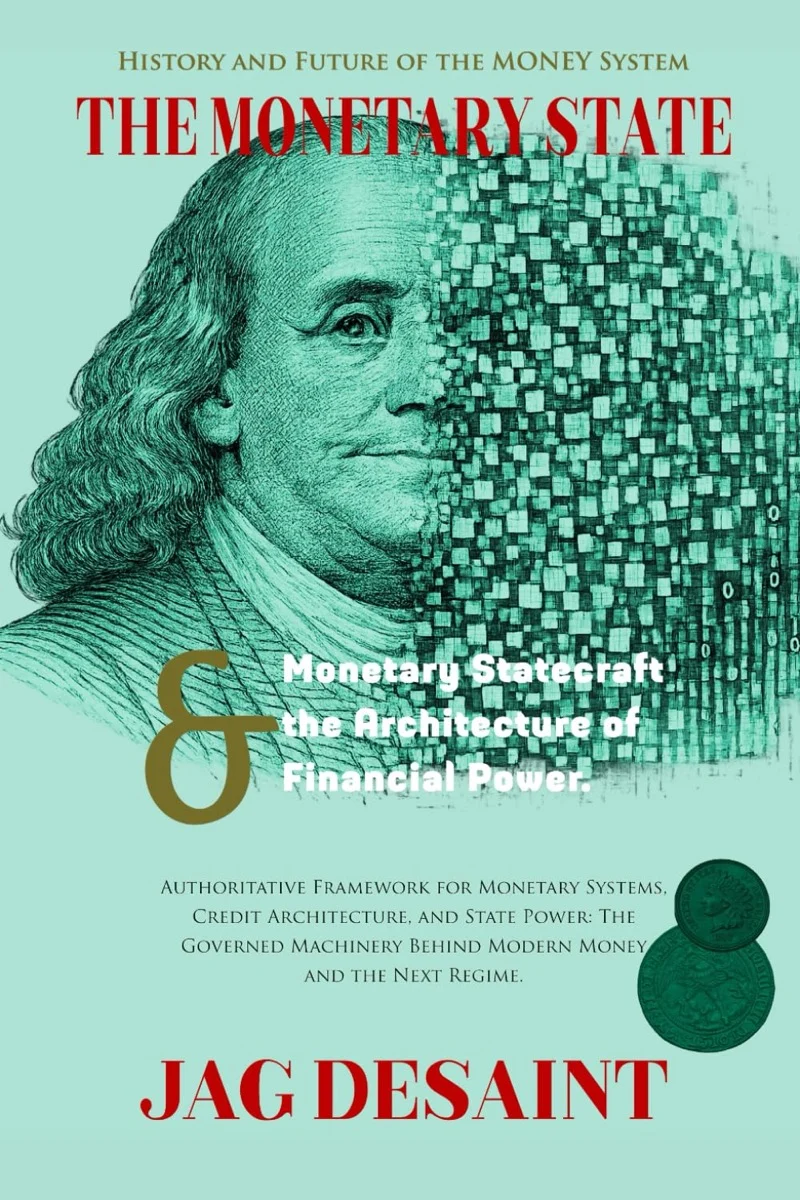
The Monetary StateMonetary Statecraft & the Architecture of Financial Power
&Think Publishing · 2026
Money fails first as a delay. A payment marked complete stays reversible. A clearing window extends. A margin call arrives early. A corridor tightens documentation and turns routine into exception. In that moment, the argument returns, and the hierarchy hidden in calm becomes visible as behavior. The Monetary State begins there. It treats money not as a symbol or a policy dial, but as a governed architecture of claims, ledgers, collateral, and finality that decides what counts as real when time becomes scarce.
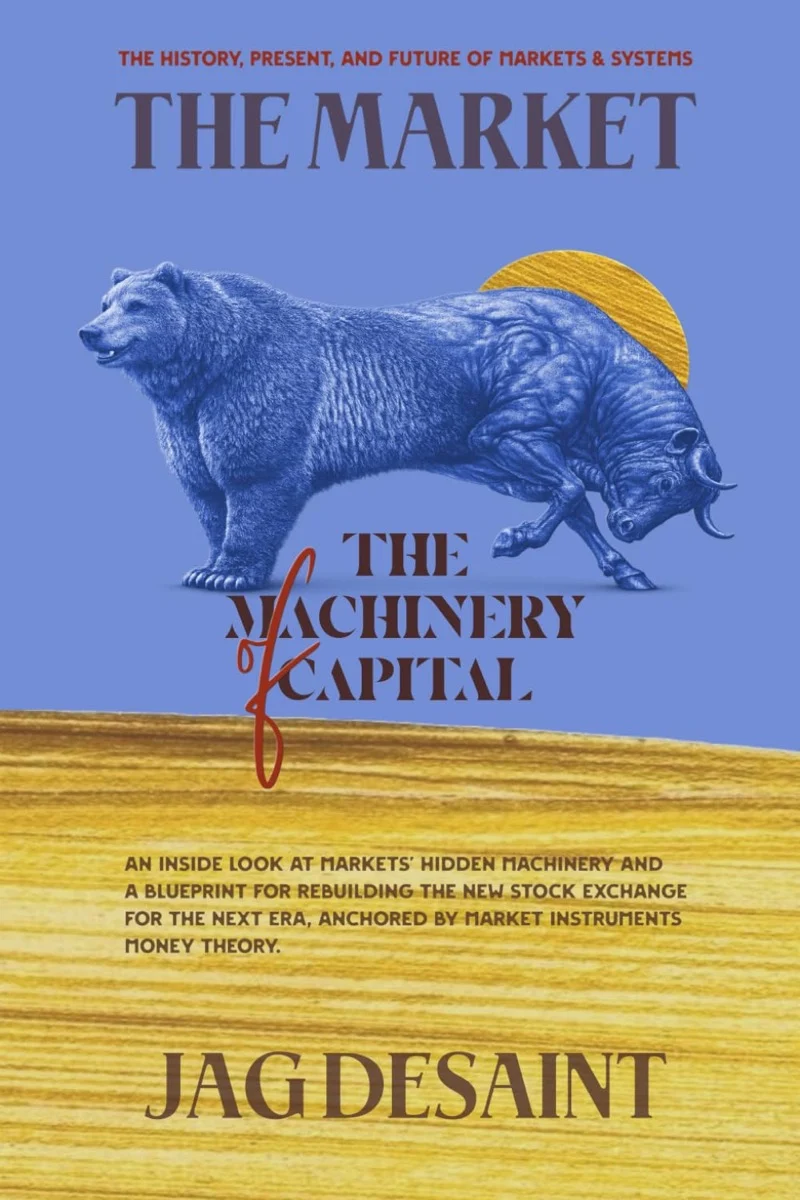
The MarketThe Machinery of Capital
&Think Publishing · 2026
Markets are usually explained with stories about fear and greed, innovation and disruption, boom and bust. Those stories are not false, but they are not the machine. The machine is rule, record, proof, and timing: who is allowed to see first, who is allowed to settle first, whose mark becomes official, whose correction becomes law, whose dispute is resolved quickly, and whose uncertainty is priced as a permanent penalty. The market does not only price assets. It prices time, and in stress, time becomes the most valuable product of all.
Empire BornMother of God
&Think Publishing · 2026
In September 1592, the river looks harmless. Gray water, low sky, the kind of day that makes men believe the world is small. Then a battered Portuguese carrack drifts in, forced by weather and pursuit, her hull scarred, her rigging sagging, her decks crowded with exhausted hands who know they are outnumbered. Her name is Madre de Deus. The name hits the tongue like a prayer. The ship answers like a confession.
TechnomicsThe Silent War
&Think Publishing · 2026
Power no longer operates mainly through force, ideology, or visible authority. In the modern world, power works through systems—technological, economic, and financial structures that shape behavior before choices are ever consciously made. These systems do not announce themselves as instruments of control. They present as neutral, efficient, and inevitable, guiding outcomes quietly while leaving the appearance of freedom intact. Power is exercised not by issuing orders, but by shaping the environment in which decisions occur.
The StatesmanThe Art of Dominion
&Think Publishing · 2025
A Codex for the Architects of Power: A ruthless manifesto of dominance, strategy, and calculated control—where power is neither given nor negotiated, but constructed, wielded, and expanded until all opposition is extinguished. The ruthless art of power is not for the weak. This book is a weapon, a masterstroke of calculated dominance, exposing the brutal truths of control, strategy, and manipulation that have defined history’s most formidable rulers, conquerors, and tacticians.




Pieces by Jag DeSaint
120 pieces
- PerspectivesMacroeconomics & Markets
The measurement has to exist before the policy, because no earlier period can be collected afterwards
What a statistic can answer is decided by its base, its frequency, its territory and the date on its newest observation, and all four are fixed before any policy question arrives. The complication is that a record built this way reads as routine paperwork until something needs an answer it never arranged to have.
By Jag DeSaint
- InsightsMacroeconomics & Markets
Since 2022 the home-price index has risen 10.1 per cent while the median new house has sold for less each year
The index stands at 328.5 for 2025 against 298.3 for 2022, and the median price of a new house sold runs 433, 427, 419 and 415 thousand dollars over the same four readings. The two series cover different housing and report different statistics, so neither one corrects the other.
By Jag DeSaint
- PerspectivesEnergy & Power
The stages of an energy transition that have to come first are the ones the national record does not count
The ten-year Treasury yield rose from 0.89 percent in 2020 to 4.29 in 2025 while crude ran from 39 dollars a barrel to 95 and back to 65, so both terms of a transition's first calculation moved in every year the plant was going up. The record that counts plant and vehicles closely does not count generation, transmission or interconnection at all.
By Jag DeSaint
- PerspectivesInfrastructure
The boundary of a public investment appraisal is drawn where the measurement stops
The capital cost in a public investment appraisal has a published national counterpart, nonresidential construction spending at 1309 billion dollars a year; the benefit stream it is weighed against has none. The discount rate decides the rest: at 4.29 percent a dollar arriving in year thirty is worth 28.4 cents, and at the 0.89 percent of 2020 it was worth 76.7 cents.
By Jag DeSaint
- PerspectivesIndustrial Policy
Productive capacity names a quantity that no series on this site reports
Of the fifty-eight annual series in the file behind this site, one carries the word capacity in its title, and it reports a percentage of capacity rather than an amount of it. What stands in are four measures of four different things, and they moved in different directions over the same three years.
By Jag DeSaint
- PerspectivesTrade & Investment
Foreign delegations come to Washington to meet a counterparty that is not there
Twenty of the fifty-one jurisdictions in the federal collections file levy all five of the taxes it names, and two levy only two of them. The body that decides whether a foreign project works is usually a state, and it is not in the room.
By Jag DeSaint
- PerspectivesWorkforce & Skills
The institutions that match workers to work appear in no series that measures the match
Job openings averaged 11.2 million a month in 2022 and 7.1 million a month in 2025, and the quits rate ended the window at 2 percent of employment, under its 2020 reading. Prime-age participation finished at 83.6 percent, its highest, so whatever is weakening is not weakening everywhere the statistics look.
By Jag DeSaint
- CommentaryIndustrial Policy
Announced investment is not a statistic and industrial policy should stop being scored on it
Construction spending on manufacturing plant rose from an annual rate of 82 billion dollars in 2021 to 215 billion in 2025, while the manufacturing output index moved from 97.6 to 97.3 on a 2017 base of 100. Lag complicates the comparison: a plant paid for in 2024 reaches an output index years later, which argues for waiting rather than scoring the policy on its announcements.
By Jag DeSaint
- PerspectivesIndustrial Policy
Public capital is allocated by the form of the claim, and the only contest the statistics show is inside one construction total
Spending on manufacturing plant went from 75 billion dollars in 2020 to 244 in 2024 and 215 in 2025, while housing units authorised by permit ended the window 48 thousand below where they began. Neither total separates public money from private, and nothing in the record decomposes the federal balance into the claims that competed for it.
By Jag DeSaint
- PerspectivesIndustrial Policy
Public purchasing is an industrial instrument, and none of these series counts it as one
A government's order book transfers demand risk in a way a grant cannot, which is the reason it would work as industrial policy. What complicates the case is that the spending which is counted rose steeply, plant construction going from 75 billion dollars in 2020 to 244 in 2024, and manufacturing output is still below its 2017 base.
By Jag DeSaint
- InsightsTrade & Investment
Imports fell once in five years and that fall is the least reliable number in the series
Imports of goods and services dropped from 3.97 to 3.86 trillion dollars in 2023, the only decline in the run. Producer prices fell that same year, which means the one movement most often read as evidence of reshoring is the one that can least bear the reading.
By Jag DeSaint
- InsightsTrade & Investment
The trade gap narrowed in one year of six, and 2025 is now the widest reading of the six
The deficit in goods and services widened from 53 billion dollars a month in 2020 to 75 in 2022, narrowed to 62 in 2023, then widened again to 78 in 2025. The current account, which counts investment income and transfers as well, moved the other way in the final year, so the two measures of the same external gap do not agree on which year is the widest.
By Jag DeSaint
- PerspectivesGovernance & Institutions
A state can only set a target on something its own accounts already count
A target can be written only on a quantity somebody already publishes, so the statistical system settles in advance which problems a government is able to own. The complication is that absence is not neutral: where no series covers a subject, the nearest published count is promoted into the gap, and the policy ends up governing whatever that count measures.
By Jag DeSaint
- PerspectivesEconomic Security
Tell a ministry where to look, not where to go
Advice that names a destination expires the day the evidence moves. The six files behind any recommendation about the American economy carry six different as-of dates, and a ministry that was handed the conclusion cannot tell which one broke.
By Jag DeSaint
- PerspectivesMacroeconomics & Markets
The deficit was widest in 2020 and the policy rate at its floor in 2021, while both construction series made their largest single-year move in 2023
The M2 money stock added 2.84 trillion dollars between the 2020 and 2021 observations while construction spending on manufacturing plant added seven billion; plant spending's largest step, 77 billion, arrives in 2023. Nothing in these files records a decision, so the sequence is a pattern in the statistics and not evidence of how anyone chose.
By Jag DeSaint
- PerspectivesMacroeconomics & Markets
Fiscal space is created by the denominator, spent at the roll, and bounded by nothing the statistics publish
Federal debt rose 8.4 trillion dollars between 2021 and 2025 and ended 0.2 points lower as a share of GDP, because the denominator grew faster than the stock. A large part of that denominator was price, and the market yield on ten-year Treasury debt went from 0.89 to 4.29 percent.
By Jag DeSaint
- PerspectivesInfrastructure
An infrastructure delivery model allocates risk, capital and blame, and it reduces none of the three
A delivery model is a contract about where the risk, the capital and the accountability sit, and only two of those can be priced and sold. The ten-year yield moved 3.4 points in five years while the record of what was built stayed one undifferentiated line, so the comparison between models is one the public record cannot check.
By Jag DeSaint
- PerspectivesEconomic Security
Openness and security are being reconciled by narrowing one channel at both ends rather than by closing the economy
Two-way U.S. goods trade with mainland China ran at 58 billion dollars a month in 2022 and 35 billion in 2025, a fall of 39.7 percent, while total imports and exports of goods and services both rose across the same three years. The channel narrowed at both ends, and no series cited here records whether a screen decided any of it.
By Jag DeSaint
- PerspectivesMacroeconomics & Markets
Institutional memory in economic policy is held in definitions, not in people
What an institution loses first is not an event but a definition: the unit a figure is stated in, the base year of an index, the rate regime a career was formed inside. Memory is not free either, because an assumption carried too long is its own failure, and only a written record separates the two.
By Jag DeSaint
- PerspectivesDevelopment Finance
The development finance architecture measures itself in the lender's currency and the lender's year
Concessional lending is judged against a market rate, and market rates moved: the ten-year Treasury averaged 0.89 percent in 2020 and 4.29 in 2025, and the broad dollar index sits 9.6 points above its lowest reading, in 2021. The complication is that an institution unable to report a figure on signing day cannot be funded, which makes the mismatch a constraint rather than a failure of will.
By Jag DeSaint
Media enquiries: Press enquiries: CEFA communications, applied@thecefa.org