
What a debt service coverage ratio tests
A coverage ratio is one division sum written into a loan agreement, and almost every argument about it is an argument about the definitions on either side of the line. By the end you will know what goes in the numerator, what the denominator fixes, and why a ratio measured in a good year says little about a bad one.
Prepared by
Last reviewed Published 4 minute read

Abbildung: The Cefa Brief
A debt service coverage ratio is one division sum. The numerator is the cash a borrower expects to have available in a period after paying the costs of running the thing that produces the cash. The denominator is the principal and interest falling due in that same period. A ratio of 1.00 means the two are equal and there is nothing spare. A ratio of 1.35 means thirty-five cents of room for every dollar owed. Lenders quote it to two decimal places because the second decimal place is where the negotiation ends up.
The ratio does two jobs in a loan agreement, and they are easy to confuse. As a distribution test it decides whether the borrower may pay anything out to its owners: miss it and the cash stays trapped in the project, which is unpleasant for equity but not a default. As a default test it sets the floor below which the lender may accelerate the loan and take the security. The same three words can carry one required level for distributions and a lower one for default, in the same document, on the same page.
What sits in each half
The numerator is defined by the contract, not by accounting convention, and the definition is where the value moves. Cash available for debt service starts from operating revenue and subtracts operating and maintenance costs, but whether it also subtracts a deposit into a maintenance reserve, a tax payment, a scheduled overhaul, or a payment to an affiliate for services is decided clause by clause. Push one of those below the line and the ratio rises without a dollar changing hands. This is why two analysts working from the same project accounts can report materially different coverage and both be reading their own document correctly.
The denominator is meant to be the easy half, because scheduled principal and interest are known in advance. It is less fixed than it looks. Interest capitalised during construction does not appear until the asset is running. A balloon maturity keeps periodic debt service low for years and then asks for everything at once, so a comfortable ratio in every year but the last is not a comfortable loan. Sculpted repayment, where principal is shaped to the revenue the project expects, can hold the ratio flat by design and hide the fact that the revenue forecast is doing all the work.
Steadiness, not size
A coverage ratio is a photograph of one period. What a lender is actually trying to learn is how far the numerator can fall before the ratio reaches one, which depends on what the revenue is made of. A base built on many unrelated payers moves less than a base built on one price set somewhere else. Government revenue makes the point at a scale a single project cannot.
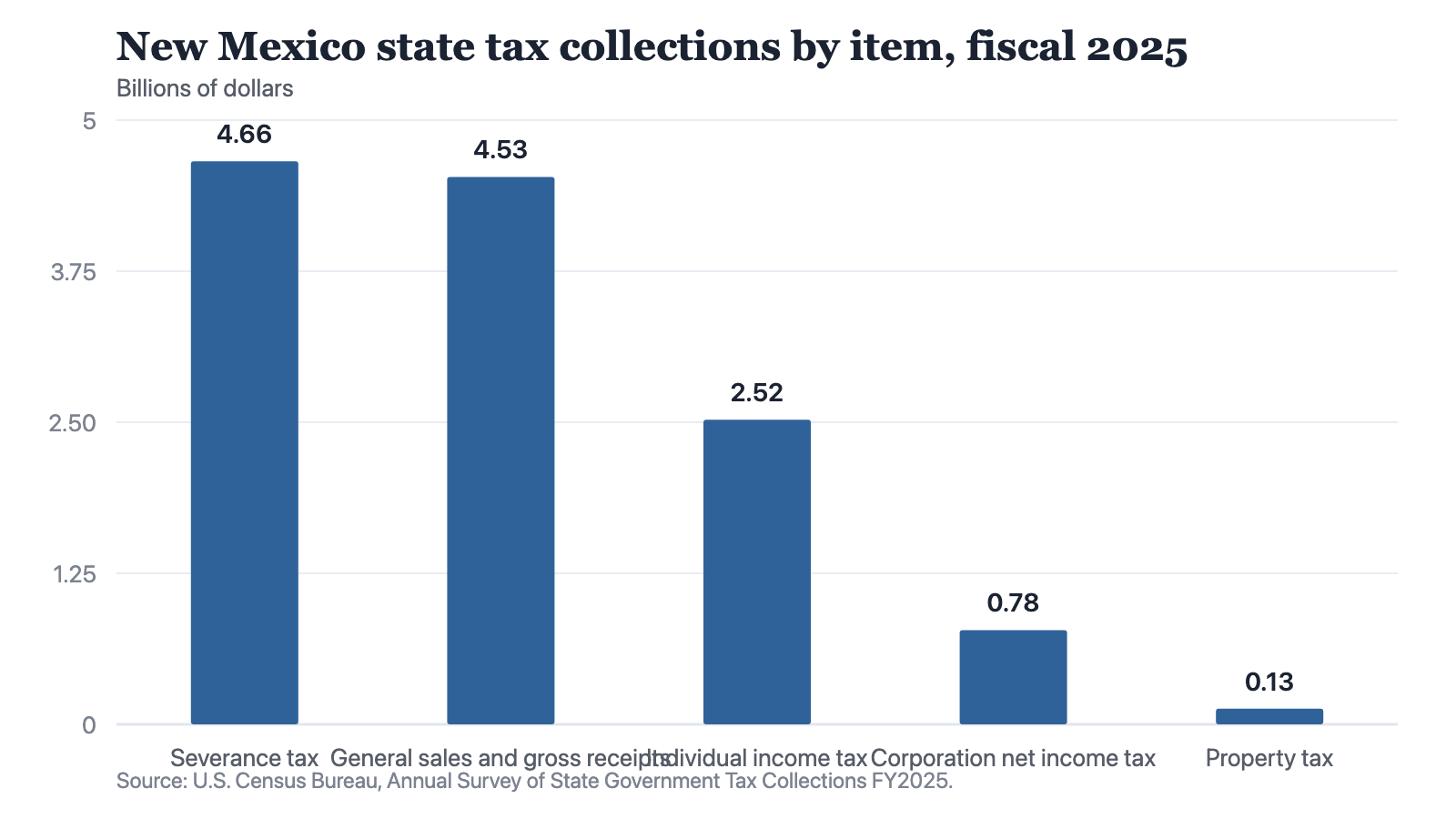
Notes: Source: U.S. Census Bureau, Annual Survey of State Government Tax Collections FY2025. These five items do not sum to the state's total collections, which include other levies.
Source: The Cefa Brief
Chart description
Five vertical bars in descending order. The first two are nearly the same height: severance tax at 4.66 billion dollars and general sales and gross receipts at 4.53 billion. Individual income tax follows at 2.52 billion, a little over half the leading bar. Corporation net income tax falls to 0.78 billion and property tax to 0.13 billion, close enough to the axis to read as a line. The shape is two tall bars, one middling bar, and then a drop to almost nothing.
Five vertical bars in descending order. The first two are nearly the same height: severance tax at 4.66 billion dollars and general sales and gross receipts at 4.53 billion. Individual income tax follows at 2.52 billion, a little over half the leading bar. Corporation net income tax falls to 0.78 billion and property tax to 0.13 billion, close enough to the axis to read as a line. The shape is two tall bars, one middling bar, and then a drop to almost nothing.
Severance tax is levied on oil, gas and minerals as they are taken out of the ground, so its yield tracks a commodity price. In the year shown it was New Mexico's largest single tax line. A coverage ratio calculated on a year when that line is high and one calculated on a year when the same line falls by half are not the same test, even though the covenant, the schedule and the asset have not changed. That is the reason a lender will not accept a single historic ratio and will run the same covenant through a downside case: a stress on price, volume, or both, with the schedule held fixed.
What the ratio does not test
Coverage is a cash question and nothing else. It does not test whether the revenue has been legally pledged, which is a security question answered by the lien. It does not test whether the borrower will still be there in fifteen years, which is a tenor question answered by the loan life coverage ratio, a different sum run over the remaining life of the debt rather than one period. It does not test whether the asset was needed, whether it was built on time, or whether the operator is competent. A project can clear its covenant comfortably every quarter and still be a bad thing to have built.
The disagreement that matters is about who benefits from a thin cushion. Sponsors argue that a high required ratio strands cash in the project that could be paying returns or funding the next one, and that lenders set the bar high because it costs them nothing to do so. Lenders answer that the cushion is the only thing standing between a soft year and a restructuring, and that every covenant loosened in a good market is tested in a bad one. Both are describing the same number from opposite sides of it.
The test to apply is a question in three parts. When a coverage ratio is quoted, ask which period it covers, which document defines the cash in the numerator, and what the same ratio falls to in the downside case the lender priced. A ratio quoted without a period is a selected year. A ratio quoted without a definition is an accounting choice. A ratio quoted without a stress case has not been tested at all, and the word test is doing no work in it.
About the author
Each author told us that for this piece they hold no interest a reader would think relevant.
Explainers are written and kept up to date by The Cefa Brief’s editors. An Explainer is background CEFA stands behind. It is not one author’s argument, and it is not a CEFA position on what anyone should do. If something here is wrong or out of date, write to applied@thecefa.org.
© 2026 Center for Economics & Foreign Affairs. To republish it, see our republication terms. Republishing
Share
The Cefa Brief · applied.thecefa.org/cefa-brief/what-a-debt-service-coverage-ratio-tests · Printed from the web edition