

CEFA staff
Jag DeSaint
Executive Director, The Cefa Brief, CEFA, CEFA
Executive Director of The Cefa Brief.
Photo: The Cefa Brief
Biography
Jag DeSaint is the Executive Director of The Cefa Brief, the Center for Economics & Foreign Affairs' publication of signed commentary and analysis. He writes on industrial capacity, development finance and the economics of foreign policy.
Languages: English
Books by Jag DeSaint
The PrincipleThe Silent Architecture of Authority
&Think Publishing · 2026
A ruthless examination of how power operates beneath the visible language of politics, institutions, loyalty, fear, legitimacy, succession, and control. This is not power as advertised. This is power as practiced. Across history, authority has rarely belonged to the loudest figure, the most virtuous figure, or even the figure whose title appears most prominently on the door.
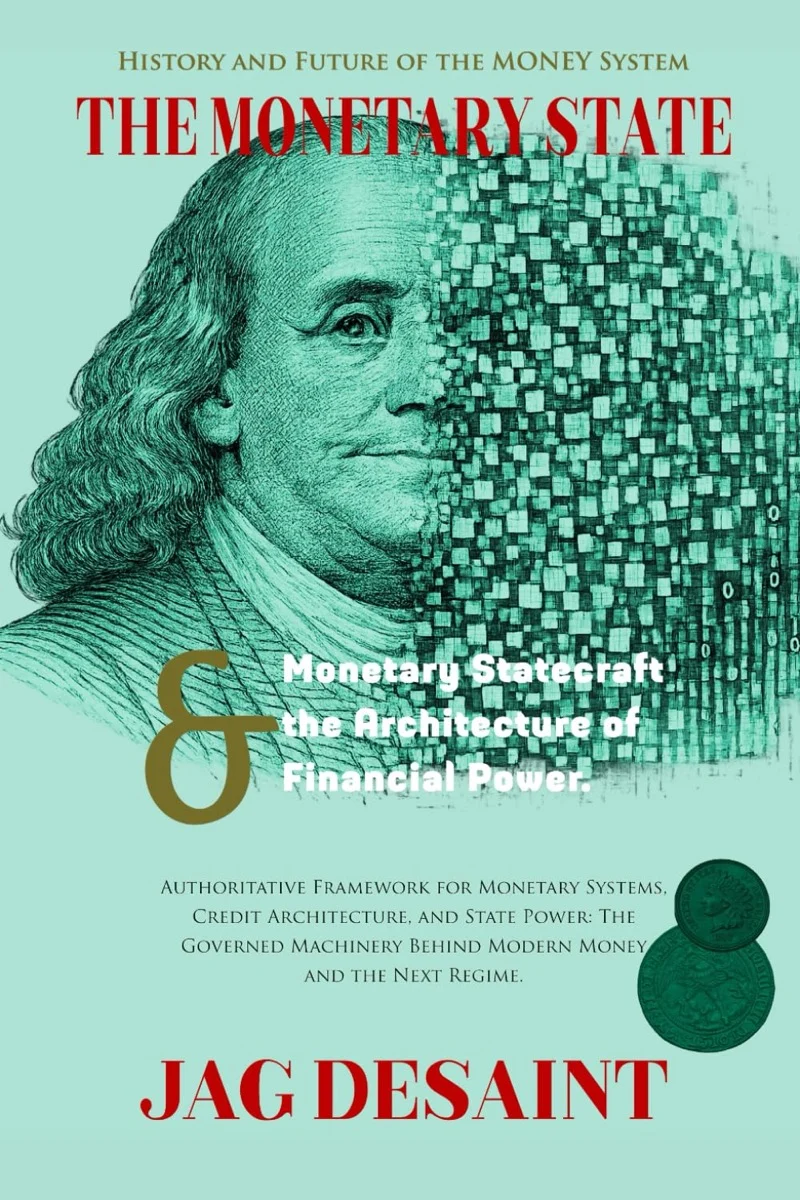
The Monetary StateMonetary Statecraft & the Architecture of Financial Power
&Think Publishing · 2026
Money fails first as a delay. A payment marked complete stays reversible. A clearing window extends. A margin call arrives early. A corridor tightens documentation and turns routine into exception. In that moment, the argument returns, and the hierarchy hidden in calm becomes visible as behavior. The Monetary State begins there. It treats money not as a symbol or a policy dial, but as a governed architecture of claims, ledgers, collateral, and finality that decides what counts as real when time becomes scarce.
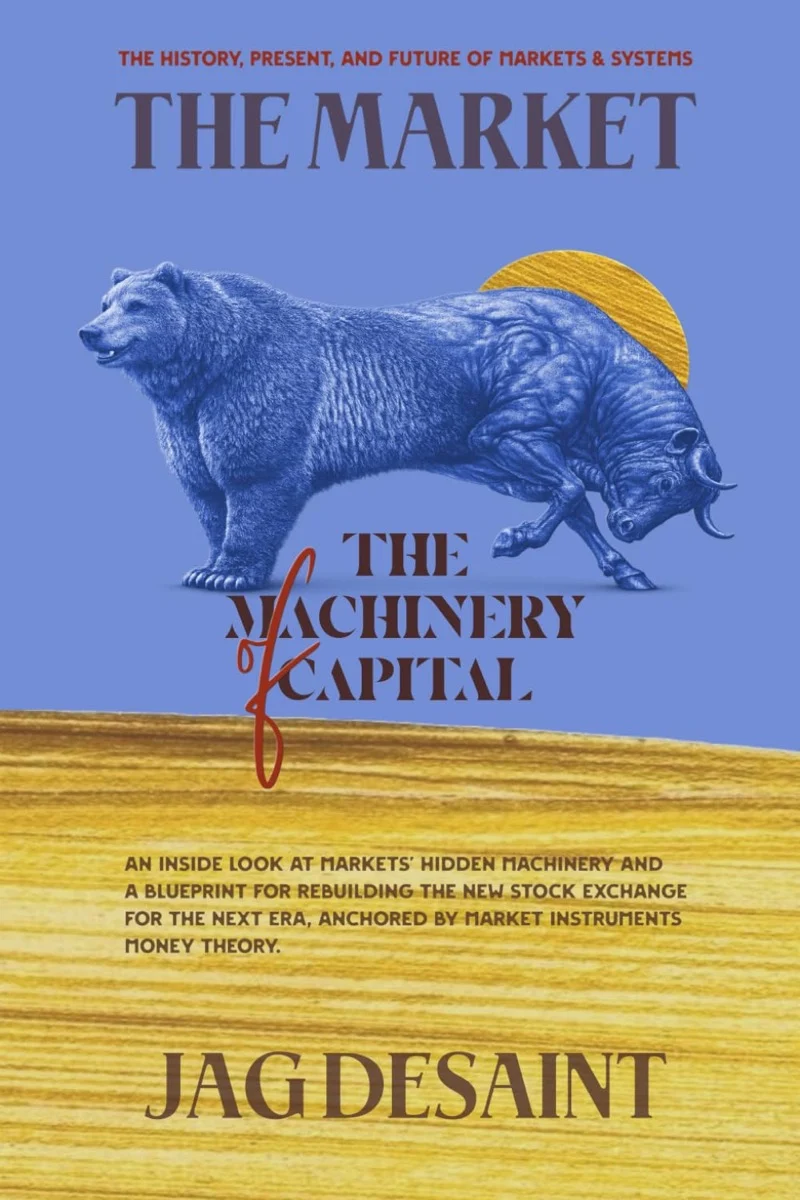
The MarketThe Machinery of Capital
&Think Publishing · 2026
Markets are usually explained with stories about fear and greed, innovation and disruption, boom and bust. Those stories are not false, but they are not the machine. The machine is rule, record, proof, and timing: who is allowed to see first, who is allowed to settle first, whose mark becomes official, whose correction becomes law, whose dispute is resolved quickly, and whose uncertainty is priced as a permanent penalty. The market does not only price assets. It prices time, and in stress, time becomes the most valuable product of all.
Empire BornMother of God
&Think Publishing · 2026
In September 1592, the river looks harmless. Gray water, low sky, the kind of day that makes men believe the world is small. Then a battered Portuguese carrack drifts in, forced by weather and pursuit, her hull scarred, her rigging sagging, her decks crowded with exhausted hands who know they are outnumbered. Her name is Madre de Deus. The name hits the tongue like a prayer. The ship answers like a confession.
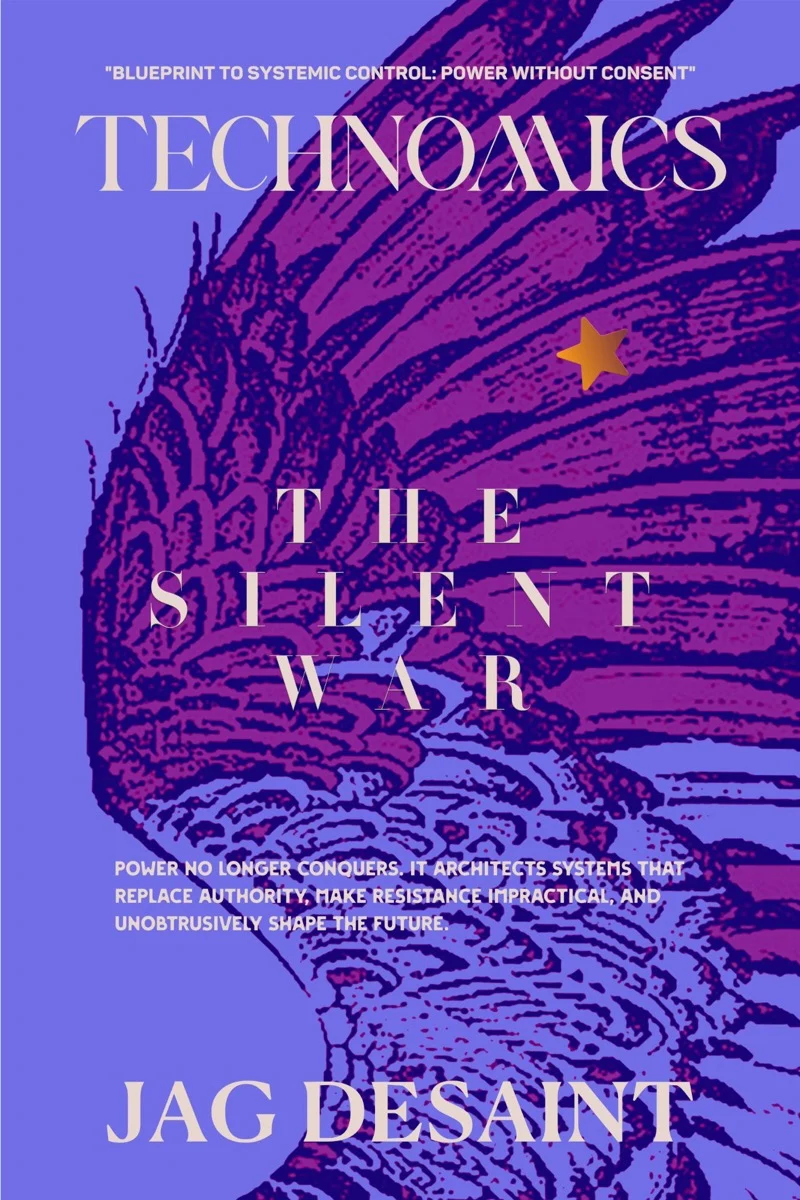
TechnomicsThe Silent War
&Think Publishing · 2026
Power no longer operates mainly through force, ideology, or visible authority. In the modern world, power works through systems—technological, economic, and financial structures that shape behavior before choices are ever consciously made. These systems do not announce themselves as instruments of control. They present as neutral, efficient, and inevitable, guiding outcomes quietly while leaving the appearance of freedom intact. Power is exercised not by issuing orders, but by shaping the environment in which decisions occur.
The StatesmanThe Art of Dominion
&Think Publishing · 2025
A Codex for the Architects of Power: A ruthless manifesto of dominance, strategy, and calculated control—where power is neither given nor negotiated, but constructed, wielded, and expanded until all opposition is extinguished. The ruthless art of power is not for the weak. This book is a weapon, a masterstroke of calculated dominance, exposing the brutal truths of control, strategy, and manipulation that have defined history’s most formidable rulers, conquerors, and tacticians.



Pieces by Jag DeSaint
120 pieces
- CommentaryRegional Development
A house price index is not a house price
Maine's house price index stands at 1044.11 and California's at 974.97. Each state's index is anchored at 100 in the first quarter of 1980, which means the ranking measures appreciation since then and says nothing at all about what a house costs.
By Jag DeSaint
- CommentaryMacroeconomics & Markets
Six productivity readings cannot carry the case being made for artificial intelligence
Output per hour in the nonfarm business sector went from 109.1 in 2020 to 118 in 2025 on a 2017 base of 100, and the largest single step in that window, 3.3 points, landed in 2024 rather than 2025. The two fastest years for the ratio are also the two slowest years for payrolls, which is the shape a shrinking denominator makes as well as the shape a new technology makes.
By Jag DeSaint
- CommentaryEnergy & Power
Every infrastructure plan assumes a maintenance workforce it never budgets
Adding up the 51 state estimates gives 6,086,200 people in installation, maintenance and repair. In 50 of those 51 jurisdictions they are paid above the state median wage. A capital programme that treats them as someone else's problem is buying an asset it has not costed to run.
By Jag DeSaint
- CommentaryRural Economies
Rural broadband went wrong at handover, not at appropriation, and the agency that signed the award should carry the account
The money bought construction, and construction is not a connection: a rural household needs a line that works, at a price it will pay, kept working after the crews have gone. No series in this brief measures a broadband award, so the case rests on mechanism and on what the wage and price data show about the interval between the money and the work.
By Jag DeSaint
- CommentaryIndustrial Policy
The bigger GDP number answers a different question
The United States publishes two gross domestic product totals and they are diverging by design. Industrial programmes are almost always defended with the larger one, which is the only one that cannot tell you whether more is being made.
By Jag DeSaint
- CommentaryStrategic Technology
An export control can close a sale and it cannot close a dependency
Goods imports from China averaged 45 billion dollars a month in 2022 and 26 billion a month in 2025, and goods exports to mainland China fell to 9 billion a month, the lowest of six readings. Over the same years the balance in goods and services widened from minus 75 billion a month to minus 78, the widest of its own six.
By Jag DeSaint
- CommentaryIndustrial Policy
One industrial line is climbing and the index around it is not
Domestic semiconductor production reached 165 on a 2017 base in 2025, from 121 in 2021. Total industrial production reached 101.2. That gap is the best evidence economic-security policy has in this data, which is exactly why it should be claimed carefully.
By Jag DeSaint
- CommentaryTrade & Investment
Trade policy built for containers is missing a trillion dollars of exports
Services exports run at $1.2 trillion on the Bureau of Economic Analysis measure. Tariff schedules, rules of origin and customs lines cannot see them, which means neither the protection nor the retaliation lands where a growing part of the exposure sits.
By Jag DeSaint
- CommentaryInfrastructure
The ten-year Treasury has done more to infrastructure than any permit reform
In 2020 a thirty-year asset was discounted against a long rate of 0.89 percent. In 2025 the same asset is discounted against 4.29. No procedural reform on the table is worth as much as that one line, and almost nobody appraising a project talks about it.
By Jag DeSaint
- CommentaryInfrastructure
Local infrastructure is limited by the people who can run a project, not by the price of money
The ten-year Treasury rose from 0.89 percent in 2020 to 4.29 in 2025 and nonresidential construction spending rose alongside it, from 856 billion dollars a year to 1,309. What complicates the argument is that the only capacity measure held here counts business and financial operations workers across every industry, not the staff of any city hall.
By Jag DeSaint
- CommentaryTrade & Investment
A tariff is borne at home, and the published data closes two of the three answers that say otherwise
Goods imports from China fell from a monthly average of 45 billion dollars in 2022 to 26 in 2025, while imports of goods and services rose from 3.97 trillion to 4.25, so the buying moved rather than came home. No series on this site measures a duty collected or an import price, so whether the exporter cut his own price cannot be tested here at all.
By Jag DeSaint
- CommentaryEconomic Security
Before the next plant, explain the idle line
American manufacturing used 75.3 percent of its capacity in 2025, against 77.6 percent in 2022. A programme that pays to add capacity without accounting for the capacity already standing is not an industrial policy. It is a construction policy.
By Jag DeSaint
- CommentaryEconomic Security
The import bill is an input cost, not a scoreboard
The United States imported $4.25 trillion of goods and services in 2025. Reading that total as a loss column is what makes a broad tariff look like a collection from abroad rather than a tax on American production.
By Jag DeSaint
- CommentaryIndustrial Policy
Industrial policy is being judged by the wrong labour number
The unemployment rate says how many job-seekers found work. It says nothing about how many people are looking. For a programme meant to draw people back into work, that is the only question that matters.
By Jag DeSaint
- CommentaryTrade & Investment
A trade agreement is worth the terms it fixes and not the exports it is credited with
Exports of goods and services rose at every step from 2021 to 2025, from 2.57 trillion dollars to 3.32, and any instrument in force across those years can be credited with a line that was rising regardless. The same window also prices what an agreement actually sells: the broad dollar index moved 8.7 percent between the low and high of six annual averages, and nobody negotiated that.
By Jag DeSaint
- CommentaryMultilateral Institutions
Sovereign restructuring was built for a world where delay cost the creditor nothing
Reprofiling worked because a payment pushed out ten years cost the creditor nothing in real terms, and in 2020 the implied real ten-year yield was minus 0.60 percent. In 2025 it was plus 1.96 percent, so the same extension now costs a real 17.6 percent, and a process whose only enforcement is peer pressure has to arrange that loss.
By Jag DeSaint
- CommentaryCapital Markets
A country should build its export credit agency for speed, because it does not set the terms
The base an export credit is priced against moved 3.40 points on the ten-year Treasury between 2020 and 2025, and the policy rate moved 3.34 points from one year to the next. Those are larger than any margin an agency concedes, which leaves the signing date as the one term it owns, and a fast agency is worth having only if it can also refuse quickly.
By Jag DeSaint
- CommentaryInfrastructure
Three flat years of housing starts is a result, not a pause
Starts have run at 1.42, 1.37 and 1.36 million units since 2023, below where the window opened in 2020. The dollars going into construction rose through the same period, and the dollars are what gets quoted.
By Jag DeSaint
- CommentaryEconomic Security
An economy that exports eleven percent of its output is hard to coerce
The Bureau of Economic Analysis puts exports at 11 percent of GDP. That number disappoints anyone who wants trade to be the growth engine and reassures anyone who thinks a trade fight is cheap. Both readings make the same mistake about what an average is.
By Jag DeSaint
- CommentaryRegional Development
Six states raise no income tax and no two replace it the same way
Alaska, Florida, Nevada, South Dakota, Texas and Wyoming levy no individual income tax. The FY2025 collections file shows what each one leans on instead, and the answer is narrower and less uniform than the shorthand suggests.
By Jag DeSaint
Media enquiries: Press enquiries: CEFA communications, applied@thecefa.org